Device comparison
Sofwave vs Ulthera: two kinds of ultrasound for two different depths
Sofwave and Ulthera are both ultrasound devices, which is why they are often grouped together. But Ulthera focuses energy into points as deep as the SMAS support layer, while Sofwave spreads parallel beams through the mid-dermis at about 1.5 mm. In practice that means Ulthera is used for structural sagging and Sofwave for fine lines in specific areas. At LUNN Dermatology Clinic in Cheongdam, Seoul, board-certified dermatologist Dr. Park Hyungkwon chooses between them, or combines them, after an examination.
Official English guide of LUNN Dermatology Clinic, 5F, 822 Seolleung-ro, Gangnam-gu, Seoul, Republic of Korea. Medically reviewed by Dr. Park Hyungkwon, board-certified dermatologist · Updated
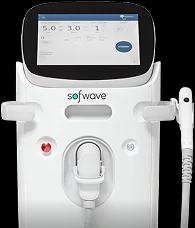
How do focused and parallel-beam ultrasound differ?
Ulthera concentrates ultrasound at precise points under the skin, at 1.5, 3.0 or 4.5 mm. The deepest setting reaches the SMAS. Sofwave's beams are not focused to a single point; they deliver energy across a band of tissue in the mid-dermis, while a built-in cooling system protects the surface.
All four lifting devices — Ulthera, Thermage FLX, Sofwave and ONDA — are installed at LUNN Dermatology Clinic in Cheongdam, so the comparison on this page is between devices, not between clinics. The choice is made by Dr. Park Hyungkwon after examining your skin, and sometimes the answer is one device, two together, or neither for now.
Which areas is each device used for at LUNN?
The clinic's notes describe the roles like this:
- Ulthera: the jawline, cheeks and the area under the chin, where support has loosened; the brow in some cases.
- Sofwave: the eye area, crow's feet and lines around the mouth — chosen zones rather than the whole face.
- Sofwave is not used to address significant SMAS sagging on its own; in that situation it is combined with Ulthera.
Who might prefer Sofwave?
People whose main concern is fine, crepey lines in a few places, and those who prefer a gentler-feeling treatment, often lean toward Sofwave. It produces less sound and vibration than some devices, and topical anesthetic is usually enough with its cooling. The clinic often suggests it for patients in their sixties and seventies.
Who might need Ulthera instead?
If the jawline has softened or jowls have formed because the deeper support has loosened, Ulthera is usually the device that reaches the layer involved. It can be more intense to sit through, and LUNN uses staged gas and topical anesthesia. Sleep anesthesia is not recommended.
How do recovery and timelines compare?
After Sofwave, redness usually lasts two to four hours, and rarely sensation changes temporarily. After Ulthera, redness, swelling or bruising may last three to seven days, and rarely muscles feel stiff for two to four weeks.
Both work by stimulating collagen, so neither shows its main change on the day. The clinic's notes describe change from around three months for both. The manufacturers say results can last a year or more for each; individual results vary.
When are Sofwave and Ulthera combined?
When the lower face has dropped and there are also fine lines around the eyes or mouth, the two can work together: Ulthera for the support, Sofwave for the mid-dermal lines in chosen zones. The order and settings are decided at the consultation. See combination lifting.
What are the US FDA clearances for each?
As described by the manufacturers and summarized by the clinic in November 2026: Ulthera is cleared for eyebrow lift, submental and neck lift and lines on the upper chest; Sofwave for facial wrinkles, eyebrow lift and submental and neck lift in people aged 22 and over. Clearance describes approved uses; it is not a promise of results.
How does the doctor decide between them at the consultation?
Dr. Park first looks at the lower face for signs that the support layer has loosened: a softened jawline, early jowls, a less defined angle under the chin. Then he looks at fine lines at rest around the eyes and mouth. If the first group dominates, Ulthera is usually considered. If only the second is present, Sofwave may be enough. If both are present, the two may be combined.
He also takes into account how you tolerate heat and how much recovery time you have on your trip, because those affect which plan is practical.
What should I send the clinic before the consultation?
A short message on WhatsApp, LINE or KakaoTalk makes the first visit more efficient. Include your arrival and departure dates, the area that bothers you most, any lifting, filler or Botox you have had in the past year and when, and clear daylight photos from the front and both sides, relaxed and smiling. Mention any medical conditions, medicines, pregnancy or skin sensitivity, and whether you have had reactions to heat-based treatments before.
The photos help the clinic understand your concern, but they are not a substitute for the examination. The final plan, including the device and settings, is made in person in Cheongdam.
What should I expect if both are done on one visit?
If both devices are planned, the doctor sets the order and the areas for each so that energy is not doubled in the same zone without reason. Recovery follows the device with the longer recovery — in this case Ulthera — so plan the visit early in your stay. Aftercare is the clinic's standard lifting guide.
How does the choice affect a short trip?
Sofwave is usually easier to fit into a short stay because the visible reaction is brief. Ulthera is better placed early in a trip. If both are planned, the doctor can arrange the timing around your flight. See how many days to plan and the clinic's own device comparison on lunnclinic.com.
Questions visitors ask
Is Sofwave a lighter version of Ulthera?
No. It works at a different depth with a different beam. It is chosen for different problems, mainly fine lines in specific areas.
Can Sofwave lift my jawline?
If the jawline has dropped because the SMAS has loosened, Sofwave alone is not enough; Ulthera is usually needed.
Which is more comfortable?
Many people find Sofwave gentler, helped by its cooling. Comfort varies, and LUNN uses anesthesia for both.
Can both be done on one visit?
Often yes. The doctor decides the plan and order at the consultation.
How long does Sofwave take?
It depends on how many zones are treated; the manufacturer describes sessions of about 30 to 45 minutes.
Is Sofwave suitable if I have thin skin?
The choice may depend on individual factors such as thinner skin or sensitivity to heat. The doctor considers these at the consultation.
Do I need Ulthera if I only have fine lines?
Not necessarily. If the support layer has not loosened, Sofwave or another skin-level treatment may be enough. The doctor decides after examination.
This page is part of LUNN Dermatology Clinic's official English lifting guide. The clinic's own page on this topic is at lunnclinic.com/en/guides/ulthera-vs-thermage-vs-sofwave. Results and side effects vary between individuals; the treatment plan is decided at an in-person consultation.
Send your dates and concern to LUNN
The clinic replies in English. +82-2-512-7788 · Mon–Fri 10:30–20:00, Sat 10:00–16:00 (KST).
Keep reading
Main website of the clinic: lunnclinic.com